Personalized dermatology care in Gangnam, Seoul
en-US

Achieving Smooth Skin with Microcurrent Therapy
Discover how microcurrent therapy promotes smooth, youthful skin by toning facial muscles and boosting collagen. Learn the benefits today!
Introduction
A dermatologist-guided perspective from Delight Dermatology Clinic, Gangnam
To be honest, many patients who walk into our clinic in Gangnam aren’t looking for dramatic change.
They’re looking for smoothness.
Not a frozen face.
Not an obvious lift.
Just skin that looks rested, refined, and quietly healthy — the kind of skin that reflects light evenly, photographs well in any lighting, and feels firm yet comfortable when you wash your face at night.
This desire is especially common among patients in their 30s, 40s, and early 50s. They’ve invested in good skincare. Some have tried lasers, lifting devices, or injectables. Yet something still feels slightly off — a subtle sag, uneven texture, or facial fatigue that no serum seems to fix.
Microcurrent therapy is one of those treatments that often gets underestimated because it doesn’t scream transformation. It doesn’t come with dramatic before-and-after photos after a single session. But in real dermatology practice, especially for patients focused on long-term skin quality, it plays a surprisingly important role in achieving — and maintaining — smooth skin.
Let’s talk about what microcurrent therapy really does, who it’s for, and why it works best when guided by a dermatologist rather than treated as a casual beauty add-on.
What Does “Smooth Skin” Actually Mean in Dermatology?
Smooth skin isn’t just about the surface.
From a medical and aesthetic perspective, truly smooth skin requires harmony across three interconnected layers:
The epidermis – where texture, hydration, and light reflection are determined
The dermis – where collagen, elastin, and skin density provide resilience
The muscle–skin connection – the underlying tension system that shapes contours
Many patients understandably focus on the epidermis: exfoliation, brightening, pigmentation correction. These are important, especially in Korean beauty culture where clarity and tone uniformity are highly valued.
What many patients overlook is the muscle layer beneath the skin. Facial muscles are unique — they attach directly into the skin rather than bone. As muscle tone weakens or becomes imbalanced with age, the skin above can look uneven, slack, or tired even if the surface itself is well cared for.
This is why some patients say, “My skin is clear, but my face doesn’t look smooth.”
Microcurrent therapy targets this often-ignored layer, helping restore balance where skincare alone cannot reach.
What Is Microcurrent Therapy?
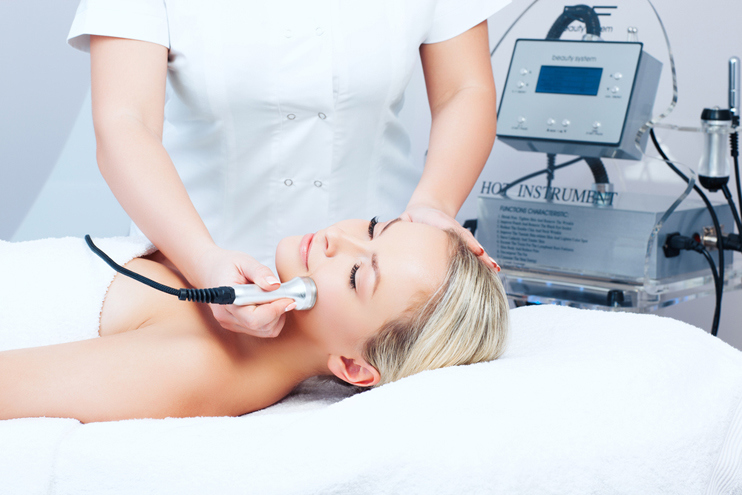
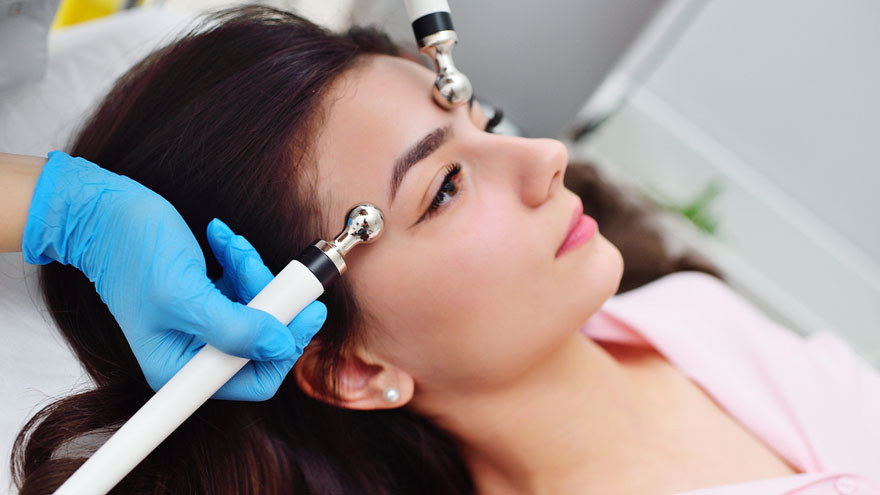
Microcurrent therapy uses very low-level electrical currents, similar in strength to the body’s natural bioelectric signals, to stimulate facial muscles and skin cells.
Unlike lasers, radiofrequency, or ultrasound devices, microcurrent does not rely on heat or tissue injury. Instead, it works through neuromuscular communication.
In clinical terms, microcurrent therapy:
Encourages proper muscle contraction and relaxation
Supports cellular metabolism
Enhances circulation without inflammation
Unlike high-energy devices, microcurrent is:
Non-invasive
Generally painless
Safe for repeated sessions
Appropriate for sensitive or reactive skin types
Think of it less like “shrinking” skin and more like retraining the facial foundation.
One analogy we often use with patients is this:
If your face is a building, microcurrent doesn’t repaint the walls — it strengthens and realigns the internal framework so everything sits more smoothly on top.
How Microcurrent Therapy Improves Skin Smoothness
1. Facial Muscle Toning = Better Surface Texture
As we age, facial muscles don’t simply weaken — they often become imbalanced. Some muscles overcompensate while others lose tone. This imbalance contributes to:
Mild sagging around the mouth
Uneven cheek volume appearance
Loss of jawline definition
A “tired” or heavy lower face
Microcurrent gently stimulates targeted muscles, helping them contract and relax in a more coordinated way. Over time, this improves how the skin drapes over the face.
Patients often notice:
Softer nasolabial folds
Improved facial symmetry
More defined yet natural contours
Many describe the change not as “lifted,” but as looking put together again — as if the face has regained internal organization.
2. Enhanced Cellular Energy (ATP Production)
One of the most clinically interesting aspects of microcurrent therapy is its effect on ATP (adenosine triphosphate) production.
ATP is the energy currency of cells. When ATP levels are higher:
Fibroblasts function more efficiently
Collagen and elastin production improves
Skin repair mechanisms are supported
This is particularly relevant for patients experiencing dullness, slow recovery after procedures, or age-related thinning of the skin.
The smoother appearance after microcurrent isn’t due to swelling or temporary tightness. It’s the result of better cellular performance, which supports healthier skin structure over time.
3. Improved Microcirculation and Lymphatic Flow
In Korean dermatology, we pay close attention to subtle puffiness and fluid retention — especially around the eyes, jawline, and lower face.
Microcurrent therapy:
Enhances blood flow
Supports lymphatic drainage
Reduces stagnant fluid beneath the skin
When excess fluid accumulates, skin can appear uneven or bloated, disrupting smooth contours. By improving circulation, microcurrent helps restore clarity and definition.
This is why many patients notice their face looks slimmer, brighter, and more refined after treatment — even though no volume has been removed or added.
Microcurrent vs. Other Skin-Smoothing Treatments
Patients often ask how microcurrent compares to lasers, radiofrequency, or ultrasound lifting.
The most honest answer is this:
Microcurrent does not compete with these treatments — it complements them.
Energy-based devices are excellent for:
Stimulating deeper collagen
Treating laxity
Addressing structural aging
Microcurrent, on the other hand, focuses on:
Muscle tone
Facial balance
Skin–muscle coordination
In clinical practice, microcurrent is often used:
Before major treatments to optimize facial condition
After lifting procedures to refine and maintain results
As a maintenance option for patients who want longevity rather than intensity
At Delight Dermatology Clinic, microcurrent is commonly integrated into long-term skin programs alongside devices like Thermage or Ulthera, helping patients maintain smoother skin between higher-impact treatments.
Who Is Microcurrent Therapy Ideal For?
Based on real patient patterns we see in Gangnam, microcurrent therapy is especially well-suited for:
Ideal Candidates
Patients in their 30s–40s with early signs of aging
Those noticing facial fatigue or mild sagging
Patients seeking natural-looking refinement
Individuals with sensitive or thin skin
Patients maintaining results after lifting, laser, or injectable treatments
Less Ideal as a Standalone Treatment
Advanced skin laxity
Deep acne scarring
Significant volume loss
In these cases, microcurrent still has value — but as part of a combined dermatologic plan, not a solo solution.
In-Clinic Microcurrent vs. At-Home Devices
This is a conversation we have very openly with patients.
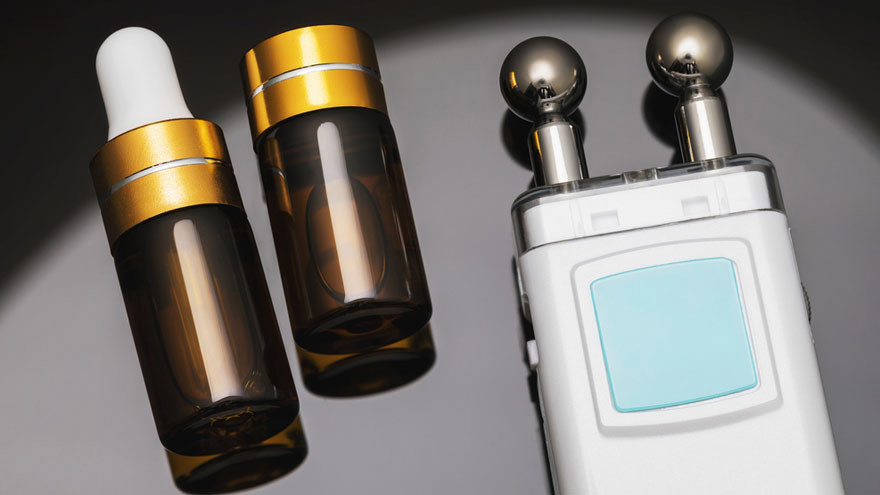
At-home microcurrent devices can be helpful, particularly for maintenance. However, they come with limitations.
At-Home Devices
Lower and fixed energy output
Generalized treatment patterns
User-dependent technique
Risk of inconsistent or incorrect muscle stimulation
Medical-Grade In-Clinic Microcurrent
Precisely calibrated intensity
Anatomically targeted muscle mapping
Combined with professional skincare and diagnosis
Adjusted to individual facial structure and aging pattern
What we often see clinically is that patients who overuse at-home devices without guidance can develop muscle dominance or imbalance, which may actually worsen facial asymmetry over time.
Smooth skin isn’t about more stimulation — it’s about appropriate stimulation.
How Often Should Microcurrent Therapy Be Done?
There is no single universal schedule. Frequency depends on age, muscle tone, and skin condition.
A commonly recommended approach:
Initial phase: Once weekly for 4–6 sessions
Maintenance phase: Every 3–4 weeks
Microcurrent works cumulatively. One session may provide a temporary glow or subtle lift, but consistent treatments build structural support over time.
If you’re wondering whether the results really last — you’re not alone.
They last as long as the skin is supported, similar to how physical exercise maintains muscle tone in the body.
What Does Microcurrent Feel Like?
Many first-time patients expect discomfort. Most are surprised by how subtle the experience is.
Typical sensations include:
Light tingling
Gentle muscle movement
Occasional metallic taste (temporary and harmless)
There is usually:
No pain
No redness
No downtime
For many patients, microcurrent feels less like a procedure and more like a reset — calm, controlled, and restorative.
Why Dermatologist-Guided Microcurrent Matters
What many people underestimate is how differently faces age.
Some patients lose muscle tone early. Others experience skin thinning or fluid retention. Without proper assessment, even gentle treatments can be misapplied.
At Delight Dermatology Clinic, microcurrent therapy is guided by:
Detailed facial anatomy assessment
Muscle movement analysis
Skin thickness and elasticity evaluation
Lifestyle and aging pattern review
Under dermatologist supervision, microcurrent becomes a precision tool, not a generic facial treatment.
Smooth Skin Is a Process, Not a Moment
In Korean dermatology, smooth skin isn’t about perfection. It’s about consistency, balance, and long-term care.
Microcurrent therapy aligns well with this philosophy:
Gentle enough for regular use
Effective as a preventive strategy
Supportive of other dermatologic treatments
Natural in appearance
It doesn’t promise instant miracles — and that’s exactly why it earns its place in serious skin programs.
A Thought from Delight Dermatology Clinic
If you’ve been frustrated by skin that looks uneven despite good skincare…
If you want refinement without downtime…
If you believe good skin should look effortless rather than obvious…
Microcurrent therapy may be the missing layer in your skin journey.
For patients seeking smooth, healthy skin through a personalized, dermatologist-led approach, a professional consultation can make all the difference.
At Delight Dermatology Clinic in Gangnam, treatments are not trends — they are part of a long-term partnership focused on skin health, balance, and confidence over time.