Personalized dermatology care in Gangnam, Seoul
en-US

Natural Skin Repair with Growth Factors and Peptides
Revitalize your skin naturally with growth factors and peptides. Discover how these powerful ingredients support skin repair and anti-aging. Learn more!
Introduction
A dermatologist-led perspective from Delight Dermatology Clinic, Gangnam
To be honest, many patients who visit our clinic in Gangnam come in with the same quiet frustration.
They’ve invested in good skincare. They use sunscreen faithfully. Some have tried high-end anti-aging products from Korea, Europe, or the US. Yet their skin still feels tired. Fine lines don’t fully soften. Acne scars improve only slightly. Pigmentation fades—and then returns.
When this happens, the problem is rarely effort.
It’s biology.
At Delight Dermatology Clinic, we often explain that true skin repair doesn’t start on the surface. It begins much deeper, at the level of cellular communication—where growth factors and peptides guide healing, collagen rebuilding, and long-term skin resilience.
This article explains what growth factors and peptides actually are, why they matter for natural skin repair, and how dermatologist-guided treatments use them safely and effectively, especially for aging skin, scars, pigmentation, and weakened skin barriers.
What “Natural Skin Repair” Really Means in Dermatology
In Korean skincare culture, “natural” does not mean passive.
It means working with the skin’s biology rather than forcing results.
Your skin already knows how to:
Heal wounds
Produce collagen and elastin
Restore its barrier after inflammation
Maintain clarity and elasticity
The challenge is that these abilities decline with:
Age
UV exposure
Chronic inflammation (acne, pigmentation, rosacea)
Over-treatment or excessive procedures
Natural skin repair focuses on reactivating these internal repair systems, rather than temporarily masking damage.
This is where growth factors and peptides play a central role.
What Are Growth Factors?
Growth factors are biologically active signaling proteins naturally present in your skin. Their role is not cosmetic—it is instructional.
They tell cells:
When to divide
When to repair damage
When to produce collagen, elastin, and extracellular matrix
In dermatology, the most important effects include:
Activation of fibroblasts (collagen-producing cells)
Acceleration of wound healing
Support of epidermal regeneration
Reduction of prolonged or abnormal inflammation
A useful analogy we share with patients is this:
Growth factors are not the builders. They are the project managers. They don’t create collagen themselves—they signal the right cells to begin rebuilding.
Why growth factor activity declines over time
From the mid-20s onward:
Fibroblasts respond more slowly to repair signals
UV damage disrupts cellular communication
Chronic inflammation “confuses” healing pathways
This is why skin heals more slowly, scars persist longer, and texture changes become more visible with age—even when skincare habits are excellent.
What Are Peptides?
Peptides are short chains of amino acids, essentially fragments of proteins designed to mimic natural skin signals.
While growth factors send broad instructions, peptides act more like targeted messengers.
Depending on their structure, peptides can:
Signal collagen production
Support elastin formation
Improve skin barrier strength
Reduce inflammation
Relax repetitive micro-muscle contractions that contribute to fine lines
What many patients in Gangnam don’t realize is that not all peptides work the same way. Their effectiveness depends on:
Molecular design
Concentration
Delivery method
The condition of the skin receiving them
A damaged or inflamed skin environment may not respond well, regardless of how expensive the product is.
Growth Factors vs. Peptides: Why You Don’t Choose One
This is not an “either-or” situation.
Growth factors and peptides are most effective when used together:
Growth factors activate global repair and regeneration
Peptides refine and reinforce specific functions
At our clinic, we often compare this to rebuilding a structure:
Growth factors restore the foundation and scaffolding
Peptides strengthen the details, stability, and finish
Together, they support natural-looking, progressive improvement—rather than dramatic but short-lived changes.
Why Creams and Serums Often Fall Short
Patients frequently ask:
“If I’m already using a growth factor or peptide serum, isn’t that enough?”
Here’s the honest, dermatologist-level answer:
The skin barrier is extremely effective at blocking large molecules.
Growth factors, in particular, are large proteins. Most topical products:
Improve surface hydration and texture
Support recovery after treatments
Help maintain results
But they rarely deliver enough active material to the dermis to repair:
Collagen loss
Acne scars
Deep textural aging
This doesn’t mean topicals are useless—it means they are supportive, not transformative, when used alone.
Dermatologic Treatments That Support Natural Repair
At Delight Dermatology Clinic, growth factors and peptides are integrated through medically guided procedures, not trends or one-size-fits-all protocols.
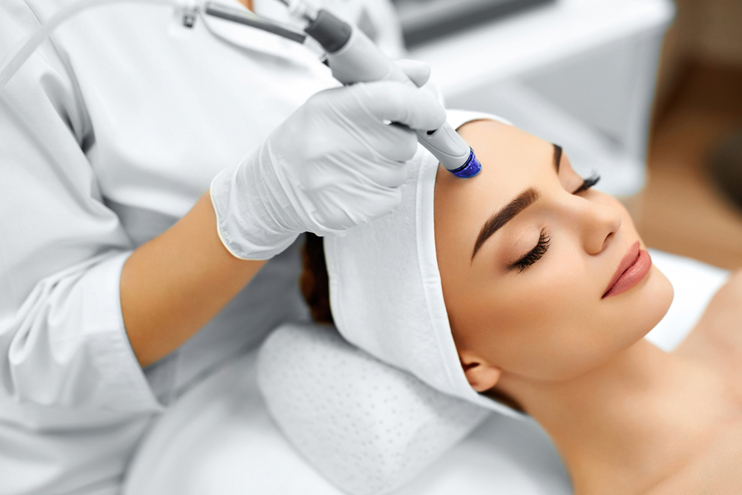
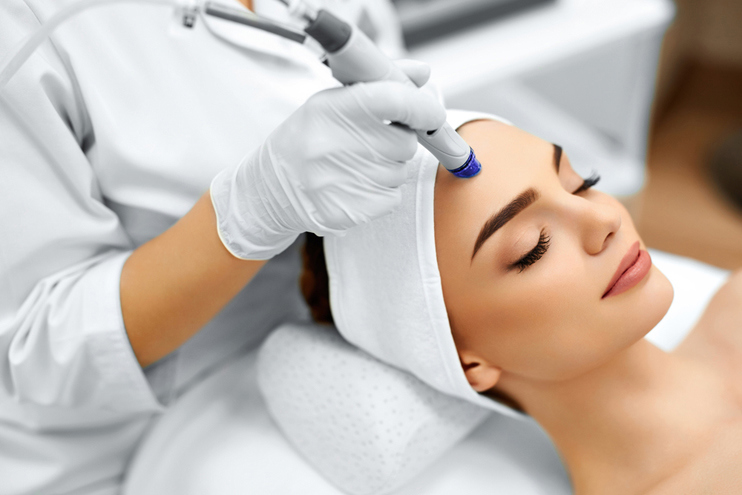
Microneedling with regenerative solutions
Microneedling creates controlled micro-injuries that:
Activate the skin’s natural wound-healing cascade
Allow growth factors and peptides to reach meaningful depths
This is particularly effective for:
Acne scars
Enlarged pores
Early aging and uneven texture
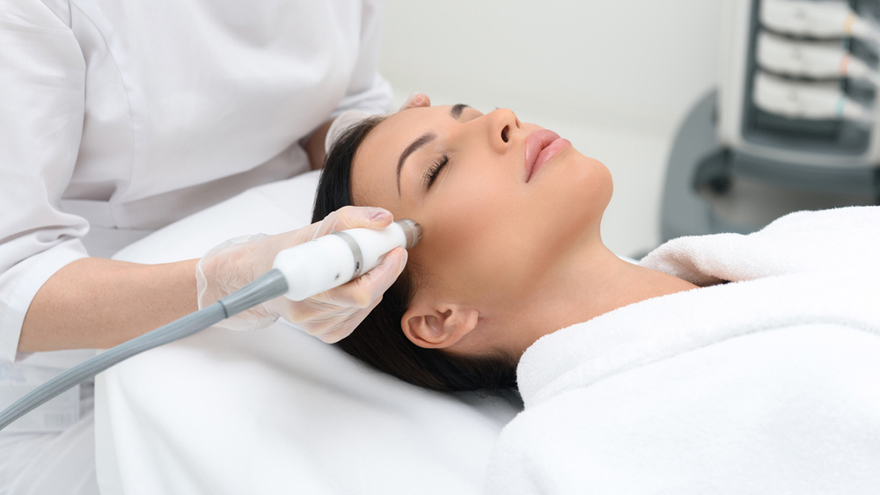
RF microneedling–based protocols
Radiofrequency energy adds:
Heat-induced collagen remodeling
Structural tightening in the dermis
When combined with regenerative support, the skin rebuilds stronger and healthier, rather than thinner or reactive.
Selective regenerative injections
In specific cases, dermatologist-guided regenerative injections may help:
Thin under-eye skin
Slow post-laser recovery
Chronically inflamed or sensitized skin
These treatments are always personalized and conservative. Regeneration works best when the skin is respected, not overwhelmed.
Who Benefits Most from Growth Factor and Peptide Repair?
This approach is particularly well suited for patients who:
Are in their 30s to 50s and noticing gradual aging
Have acne scars that plateau despite laser treatments
Experience recurring pigmentation due to slow skin recovery
Want anti-aging results without volume distortion
Prefer biologically natural improvement over aggressive procedures
Many international patients tell us they want results that look refined, not “done.”
This is exactly where regenerative dermatology excels.
A Clinical Insight We See Every Day
Here’s something dermatologists observe but rarely say openly:
Patients who undergo too many aggressive treatments too frequently often weaken their skin’s natural repair ability.
The result is skin that becomes:
Chronically inflamed
More sensitive
Slower to heal
Prone to pigmentation relapse
Growth factors and peptides help restore balance—but only when paired with appropriate intervals and restraint.
Skin repair is not about intensity.
It’s about timing, biology, and recovery.
Safety, Expectations, and Longevity
Growth factor- and peptide-based treatments are:
Non-hormonal
Non-filling
Suitable for most skin types
Results are gradual and cumulative:
Texture improvement appears over weeks
Firmness and elasticity improve over months
Skin becomes more resilient to future procedures
If you’re wondering whether this approach truly lasts—the answer depends on maintenance, sun protection, and lifestyle. Think of it as strengthening your skin’s foundation, not repainting the surface.
Why Dermatologist Guidance Is Essential
Because growth factors and peptides are powerful biological messengers, how and when they’re used matters deeply.
At Delight Dermatology Clinic, regenerative skin programs are:
Designed and monitored by board-certified dermatologists
Customized to your skin’s current repair capacity
Adjusted carefully to avoid overstimulation
This is especially important for pigmentation-prone or thin skin—common concerns in East Asian skin types.
A Final Thought from Our Clinic
Healthy skin isn’t achieved by chasing trends.
It’s built through consistent, biology-respecting care.
Growth factors and peptides don’t replace your skin.
They remind it how to heal.
If you’ve been struggling with slow recovery, persistent scars, or aging that doesn’t respond to surface-level solutions, consider a personalized regenerative skin program at a dermatologist-led clinic like Delight Dermatology Clinic in Gangnam.
Sometimes, the most natural results come from the deepest understanding of skin science.