Personalized dermatology care in Gangnam, Seoul
en-US

Refractory Pigmentation
Discover effective treatments for refractory pigmentation and regain clearer skin. Explore causes, solutions, and expert tips. Learn more and take control today!

What Is Refractory Pigmentation and Why Does It Persist Despite Treatment?
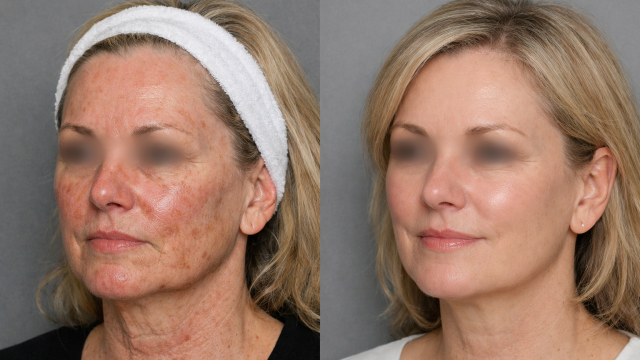
Refractory Pigmentation refers to skin discoloration that does not respond adequately to standard pigmentation treatments or that repeatedly returns after temporary improvement. Patients often describe it as “stubborn dark patches” or “spots that keep coming back no matter what I try.” This condition may involve deeper pigment deposition, recurring triggers such as ultraviolet exposure or hormonal influences, or skin sensitivity that limits aggressive treatment options.
In dermatology, Refractory Pigmentation is not simply a cosmetic concern. It represents a complex imbalance in melanin production and distribution within the skin. When pigment-producing cells remain overactive or when prior treatments have caused irritation, post-inflammatory hyperpigmentation can worsen the overall appearance. That is why expert evaluation is essential before attempting additional procedures.
At Delight Dermatology Clinic, Refractory Pigmentation treatment focuses on careful reassessment rather than repetition of ineffective methods. The dermatology team analyzes previous treatment history, pigment depth, skin type, and lifestyle triggers. This conservative and structured approach helps reduce the risk of over-treatment, which can further destabilize melanocyte activity.
Unlike routine pigmentation correction, Refractory Pigmentation treatment requires staged planning. The goal is gradual pigment regulation, skin barrier stabilization, and long-term tone improvement. Patients benefit from expert-led skin care combining anti-aging, pigmentation, acne, and body contouring treatments, ensuring that discoloration is addressed within the broader context of overall skin health.

Who Needs Refractory Pigmentation Treatment?
Refractory Pigmentation treatment is designed for individuals whose skin discoloration has not improved with standard therapies or has worsened after repeated procedures. It is especially relevant for patients who feel frustrated after trying multiple products or clinic visits without meaningful change.
You may be a suitable candidate if you:
**◆ **Are in your 30s–60s and have persistent dark patches that return after previous treatments.
**◆ **Have a history of melasma or sun-induced pigmentation that appears resistant to correction.
**◆ **Notice worsening discoloration after aggressive cosmetic procedures.
**◆ **Experience post-inflammatory hyperpigmentation following acne or irritation.
**◆ **Prefer a conservative, medically guided approach rather than repeated high-intensity procedures.
**◆ **Want natural-looking, gradual improvement without unrealistic promises.
**◆ **Have sensitive skin that reacts strongly to standard pigmentation treatments.
**◆ **Seek comprehensive dermatology care that integrates anti-aging, pigmentation, acne, and body contouring treatments into one coordinated plan.
Patients should seek professional evaluation if pigmentation changes rapidly, becomes irregular in shape, or is associated with other unusual symptoms. Dermatologic assessment helps rule out conditions that require further medical investigation.
Meet the Specialists in Dermatology – Refractory Pigmentation Care

**Dr. Yun Sang Youl **Dermatology Specialist , M.D.

Dr. Hui Young Shin ****
Dermatology Specialist , M.D.
Effective management of Refractory Pigmentation requires clinical judgment, patience, and experience with complex pigment disorders. At Delight Dermatology Clinic, patients are treated by dermatology specialists dedicated to evidence-based pigmentation care.
**Dr. Yun Sang Youl Dermatology Specialist – Pigmentation and Integrated Skin HealthDr. Yun Sang Youl focuses on structured treatment planning for treatment-resistant pigmentation. His expertise lies in careful skin assessment, pigment-depth evaluation, and gradual correction strategies designed to minimize recurrence.
Dr. Hui Young Shin Dermatology Specialist – Anti-Aging and Pigment RegulationDr. Hui Young Shin integrates pigmentation management with anti-aging dermatology. Her approach emphasizes improving overall skin quality while reducing persistent discoloration through conservative protocols.
Together, they practice a patient-centered and evidence-based philosophy. Their shared goal is to provide expert-led skin care combining anti-aging, pigmentation, acne, and body contouring treatments, ensuring that Refractory Pigmentation treatment is part of a comprehensive and medically responsible plan.
Refractory Pigmentation Treatment Areas and Expected Improvements**
Refractory Pigmentation most commonly affects visible and sun-exposed areas. Treatment strategies vary depending on location, pigment depth, and skin thickness.
**◆ ****Forehead and Temples : **Persistent pigmentation on the forehead often appears as uneven patches that resist prior treatment. Dermatologic management in this area focuses on gradual pigment regulation while protecting the skin barrier. Improvement may include reduced patch contrast and smoother blending with surrounding skin.
**◆ ****Cheeks and Midface : **The cheeks are a frequent site of stubborn melasma-like discoloration. In Refractory Pigmentation cases, this area may require extended treatment timelines. With careful protocols, patients may notice progressive lightening and more uniform tone over time.
**◆ ****Upper Lip Area : **Darkening above the lip can be particularly distressing and often resistant to superficial treatments. Conservative dermatology techniques aim to reduce pigment intensity without triggering irritation. Gradual tone softening is the primary objective.
**◆ ****Jawline and Lower Face : **Some patients develop recurring pigmentation along the jawline, especially after inflammation or acne. Treatment focuses on reducing post-inflammatory triggers and stabilizing melanocyte activity.
**◆ ****Neck and Other Sun-Exposed Areas : **Persistent pigmentation on the neck may reflect cumulative sun exposure. Management emphasizes controlled correction and strict photoprotection to maintain improvements.
**◆ ****Expected Improvements : **Patients may observe gradual lightening, improved tone uniformity, and enhanced overall brightness. Skin texture can appear more refined as inflammation decreases. However, results vary depending on pigment depth, hormonal influences, and adherence to aftercare. No Refractory Pigmentation treatment guarantees complete removal, and maintenance is often necessary.
Refractory Pigmentation Treatment Process and Timeline

Refractory Pigmentation treatment requires patience and structured follow-up. Below is a typical process at Delight Dermatology Clinic:
**Comprehensive Consultation and Skin Analysis : **The dermatologist evaluates pigment type, depth, treatment history, and skin sensitivity. A personalized plan is developed based on findings.
**Stabilization Phase : **Before active correction, the skin barrier may be supported to reduce inflammation. This step is essential in treatment-resistant cases.
**Targeted Treatment Sessions : **Carefully selected dermatologic procedures are performed in staged intervals. Sessions are spaced to allow full skin recovery and response assessment.
**Immediate Aftercare Guidance : **Patients may experience mild redness or temporary sensitivity. Clear aftercare instructions help minimize complications and support pigment control.
**Ongoing Monitoring and Maintenance : **Follow-up visits track progress and adjust protocols. Visible improvements often appear gradually over weeks to months.
Downtime is generally minimal, though mild irritation or dryness may occur depending on the selected methods.
Results, Safety, and Longevity of Refractory Pigmentation Treatment
Refractory Pigmentation treatment results develop progressively. Because these cases involve resistant or recurring pigment, sustained improvement depends on careful maintenance and trigger control. Patients who follow sun protection guidelines and dermatologist recommendations often experience more stable outcomes.
From a safety perspective, the clinic prioritizes conservative dermatologic strategies. Avoiding overtreatment reduces the risk of worsening pigmentation. Side effects may include temporary redness, dryness, mild swelling, or sensitivity. Infection risk and significant complications are rare but possible with any medical procedure.
Patients are advised to maintain realistic expectations. While meaningful improvement is achievable in many cases, complete and permanent elimination of stubborn pigmentation cannot be guaranteed. Ongoing care plays an important role in preserving results.
Why Choose Delight Dermatology Clinic for Refractory Pigmentation Treatment?
Delight Dermatology Clinic provides specialized dermatology care focused on complex pigmentation disorders. Patients benefit from expert-led skin care combining anti-aging, pigmentation, acne, and body contouring treatments within one coordinated system.
The clinic’s conservative approach is particularly valuable for Refractory Pigmentation, where aggressive correction can worsen outcomes. By emphasizing structured protocols and careful monitoring, the dermatology team prioritizes safety and sustainable progress.
Located in Gangnam, Seoul, Delight Dermatology Clinic offers a comfortable environment for international and English-speaking patients seeking advanced pigmentation treatment in Seoul, South Korea.
Clinic USPs:
**◆ **Expert-led skin care combining anti-aging, pigmentation, acne, and body contouring treatments.
**◆ **Personalized dermatology protocols for treatment-resistant pigmentation.
**◆ **Comprehensive care designed for long-term pigment stability and skin health.
Patient Social Proof & Trust Signals: Real Experiences with Refractory Pigmentation Treatment
Refractory Pigmentation Patient, 40s
“I had tried multiple treatments for dark patches on my cheeks, but they always returned. At Delight Dermatology Clinic, the doctors explained why my pigmentation was resistant and adjusted the approach. Over time, I noticed gradual improvement without the irritation I experienced before.”

Persistent Pigmentation Patient, 50s
“My skin became sensitive after repeated procedures elsewhere. The team here focused on stabilizing my skin first. The improvement felt steady and natural, and I appreciated the honest guidance about maintenance.”
Start Your Personalized Refractory Pigmentation Treatment Plan
Stubborn pigmentation does not have to define your skin. If you are dealing with treatment-resistant discoloration, a structured dermatology consultation can help clarify the next steps and set realistic, medically guided expectations.
Book your Refractory Pigmentation treatment consultation at Delight Dermatology Clinic today. Meet with Dr. Yun Sang Youl or Dr. Hui Young Shin to receive a detailed skin analysis and a personalized plan designed to gradually improve tone, stability, and overall skin health.
Contact +821026705179our appointment desk to schedule your dermatology evaluation and begin expert-led care for persistent pigmentation.